 PickGlobe

A fresh stain is usually fixable, and the first ten minutes decide most of it. This handbook gives a quick method for the stains people ask about most, then checks it against two US university extension guides so you can see where the advice agrees and where it differs. This guide is for anyone treating stains on washable clothes at home. It is general information: we have not tested these methods ourselves, and no method removes every stain. Always read the care label first.
⚡ Quick answer
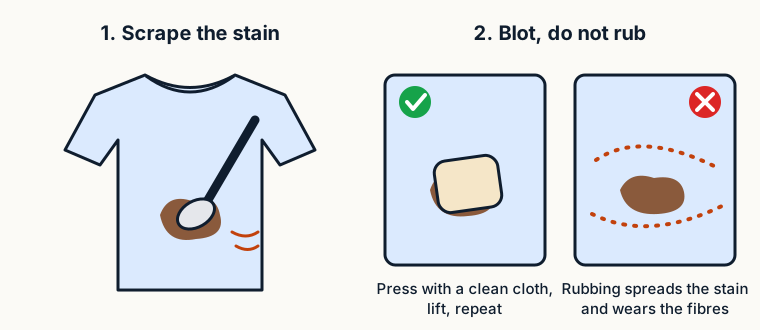
- Act fast, blot and never rub. Scrape off any solid, then press a clean cloth on the stain.
- Go cold first for protein stains such as blood, egg, milk and grass. Both extension guides say hot water can set them.
- Do not use the dryer or an iron until the stain is gone. Heat sets many stains. (Wax is the one exception described below.)
- Test any product on a hidden seam and keep chlorine bleach away from silk, wool and spandex.
- Take dry-clean-only items, suede, leather and fur to a specialist.
🧭 The four golden rules
- Act fast ⏱️. Fresh stains come out more easily than set ones. A pretreat stick helps if you cannot wash straight away.
- Blot, never rub 🧻. Rubbing spreads the stain and can break the fibre, damage the finish or remove colour. Work from the back of the fabric so you push the stain out, not further in.
- Avoid heat first ❄️. Use cool or cold water on stains you cannot identify, and keep stained items out of the dryer until the stain has gone.
- Test first 🧪. Try any stain remover on an inconspicuous part of the garment and stop if the colour or fabric changes.
📊 Stain treatment table
The "handbook method" column is the quick method this page was built from. The last column is what the two extension guides say about the same stain, so you can see where the advice differs. "Not covered" means we did not find that point in the guides we read.
| Stain | Handbook method | Water | What the extension guides say |
|---|---|---|---|
| ☕ Coffee or tea | Flush from behind with cool water, then equal parts white vinegar and dish soap, rinse | Cold | The Pacific Northwest guide soaks drinks stains for 15 minutes in lukewarm water, a little dish detergent and a spoon of white vinegar. Kentucky says fresh tannin stains usually launder out in detergent and hot water if the fabric allows. |
| 🍷 Red wine | Blot, then liquid dish soap and 3% hydrogen peroxide for 10 to 15 minutes | Cold or cool | Wine sits with other drinks in the Pacific Northwest guide: vinegar soak, or sponge with alcohol, then an enzyme soak. Both guides treat 3% hydrogen peroxide as a bleach to test for colourfastness first. |
| 🌿 Grass | Rub enzyme liquid detergent into the stain, wait 15 to 20 minutes | Warm | Kentucky lists grass with protein stains, so soak in cold water before washing. The Pacific Northwest guide sponges with alcohol, uses cool water and detergent, then a 30-minute warm enzyme soak. |
| 🩸 Blood | Soak at once in cold water, then 3% peroxide on stubborn spots | Strictly cold | Both guides say cold or cool water first because heat sets protein. The Pacific Northwest guide then soaks in cool to lukewarm water with dish detergent and household ammonia, then an enzyme soak. |
| 🍳 Grease or oil | Cover with concentrated dish soap, massage in, wait 10 to 15 minutes | Warm or hot | Both guides agree on detergent: work heavy-duty liquid detergent into the stain, then wash in the hottest water safe for the fabric. |
| 🖊️ Ballpoint ink | Dab 70% or stronger rubbing alcohol with a cotton ball over paper towels | Cold | Kentucky says some inks may be impossible to remove and suggests a pretreat stain remover or denatured alcohol, sponged around the stain first. |
| 🍫 Chocolate | Scrape solids, soak in cold water with enzyme detergent for 30 minutes | Cold or warm | Both guides group chocolate with greasy food stains: rub in heavy-duty liquid detergent, wash, then bleach any leftover colour if the fabric allows. |
| 🍅 Tomato or ketchup | Flush with cold water, work in liquid soap, dab with white vinegar | Cold | Both guides group tomato with greasy food stains and rub in heavy-duty liquid detergent. Vinegar is not mentioned for it. |
| 💦 Sweat or underarm | Paste of 2 parts baking soda to 1 part peroxide, scrub with a soft brush | Warm | Kentucky: prewash remover or bar soap; if the colour changed, ammonia on fresh stains or white vinegar on old ones; then an enzyme product or oxygen bleach in the hottest safe water. Baking soda is not mentioned. |
| 🕯️ Candle wax | Freeze to pop off excess, then press with a warm iron over paper towel | Heat transfer | The Pacific Northwest guide: rub with ice, scrape, then press with a warm, not hot, dry iron between paper towels, then dry-cleaning fluid. This is the exception to "never iron a stain". |
🧶 Fabric guide
| Fabric | Handbook: safe agents | Handbook: avoid | What the guides add |
|---|---|---|---|
| Cotton and linen | Enzyme detergents, oxygen bleach, white vinegar, baking soda | Undiluted chlorine bleach, hard scrubbing | Test colourfastness on dyed fabric before any bleach. |
| Synthetics (polyester, nylon, acrylic) | Dish soap, isopropyl alcohol, enzyme pre-soaks | High dryer heat, harsh solvents | Kentucky warns that acetone dissolves acetate and damages triacetate and modacrylic, so test any solvent first. |
| Delicates (silk, wool, cashmere) | Mild silk or wool washes, diluted vinegar rinses, dry cleaning | Enzyme cleaners, chlorine bleach, hot water | Both guides say not to use chlorine bleach on silk, wool or spandex. The point about enzymes is from the handbook only. |
Take suede, leather, fur and anything marked "dry clean only" to a specialist. For a blend, use the method suited to the most sensitive fibre. Our guide to understanding fabric labels explains what the care symbols mean.
✅ What to check before you treat a stain
- What the care label says, and whether the item is washable at all.
- What the stain is, and how old it is. If you do not know, use cool water.
- The fibre, including blends: use the method suited to the most sensitive fibre.
- Colourfastness, by testing the product on a hidden seam.
🧴 Home stain station
- 🧼 Liquid dish soap for greasy and oily stains.
- 🍶 White distilled vinegar for drink stains and old sweat marks.
- 🧪 3% hydrogen peroxide, the antiseptic-strength kind, never the stronger hair-bleaching solution. Test on dyed fabric, because it can lift colour.
- 🦠 Enzyme laundry detergent or pre-soak for protein stains such as blood and grass.
- 🍸 Rubbing alcohol for ink, tested first on the fabric.
- 🧂 Baking soda to absorb oil and make a gentle paste. This one is from the handbook only.
Use one product at a time and rinse it out before trying another. Kentucky says to rinse stain remover thoroughly before laundering to avoid unwanted chemical reactions.
🔄 First-aid flowchart
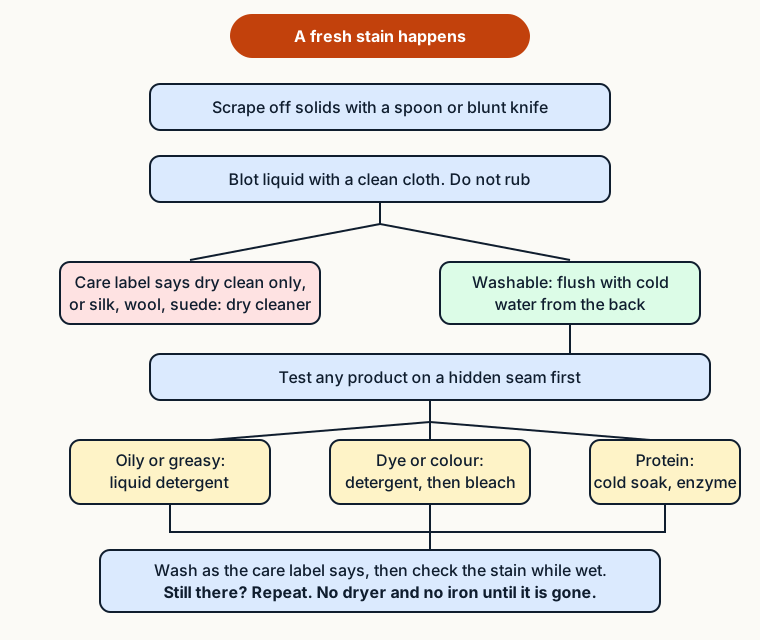
The same steps in words:
- Scrape off solid debris with a spoon or blunt knife.
- Blot the liquid with a clean white cloth or paper towel. Do not rub.
- If the item is silk, wool, suede, leather or dry clean only, stop and take it to a specialist.
- Otherwise flush the stain with cold water from the back of the fabric.
- Test your chosen product on a hidden seam.
- Treat by type: oily stains with liquid detergent, dye or colour stains with detergent and then a bleach the fabric allows, protein stains with a cold soak and an enzyme product.
- Soak for the time the method gives, then wash as the care label says.
- Check the stain while the item is still wet. If any is left, repeat. Only dry it when it has gone.
💡 Five mistakes that set stains
- ❌ Drying a stain that is not gone. The Pacific Northwest guide says not to put an item in the dryer until the stain is completely removed, and both guides say not to iron a stained fabric because heat sets the stain. Air dry and treat again.
- ❌ Hot water on blood, egg or milk. Kentucky says hot water cooks protein and makes it harder to remove.
- ❌ Chlorine bleach on sweat stains. The handbook says it can turn yellow marks darker. We did not find this in the guides we read, so treat it as the handbook's advice only; Kentucky does say not to use chlorine bleach on silk, wool or spandex, and that it makes rust stains permanent.
- ❌ Scrubbing delicate knits. Kentucky says too much rubbing can break fibres, damage the finish, remove colour or cause yarn slippage on loosely woven fabrics.
- ❌ Working from the front. Both guides say to work from the back over an absorbent surface so the stain is pushed out.
❓ What we could not confirm
- The two university guides are old: Kentucky's was issued in 1996 and the Pacific Northwest guide is dated 1997. Product names, such as laundry detergents and bleaches, have changed, so read today's labels.
- Neither guide covers every row in the table. Where a point is only from the handbook, we say so.
- We have not tested these methods, and results vary with the fabric, dye and age of the stain. Some stains, such as permanent inks and dyes, may be impossible to remove.
- This is general information, not professional cleaning advice. Follow the product label, and keep cleaning products away from children and pets.
Related guides
- Understanding fabric labels when shopping online
- Shoes: leather and fabric labels, sizing and care
- Buying children's dresses online: sizing and fabric
Last checked: 22 October 2026. Sources: University of Kentucky Cooperative Extension, Stain Removal for Washable Fabrics (H.E. 2-840) (issued September 1996, revised December 1996); Pacific Northwest Extension, PNW 440 Stain Removal Guide for Washable Fabrics (dated 11 February 1997, hosted by adldata.org). The handbook method column comes from the PickGlobe handbook draft supplied by the site owner.